- Art & Culture
Palazzo Cittanova


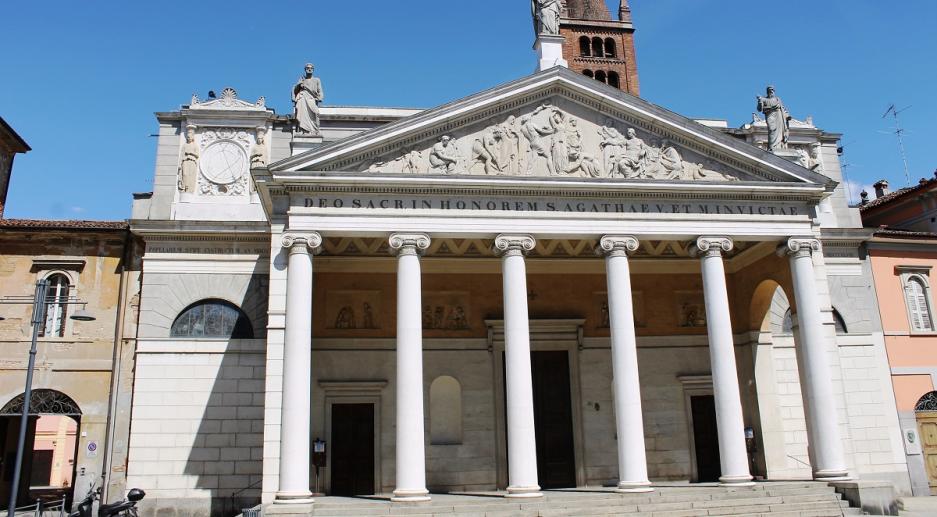
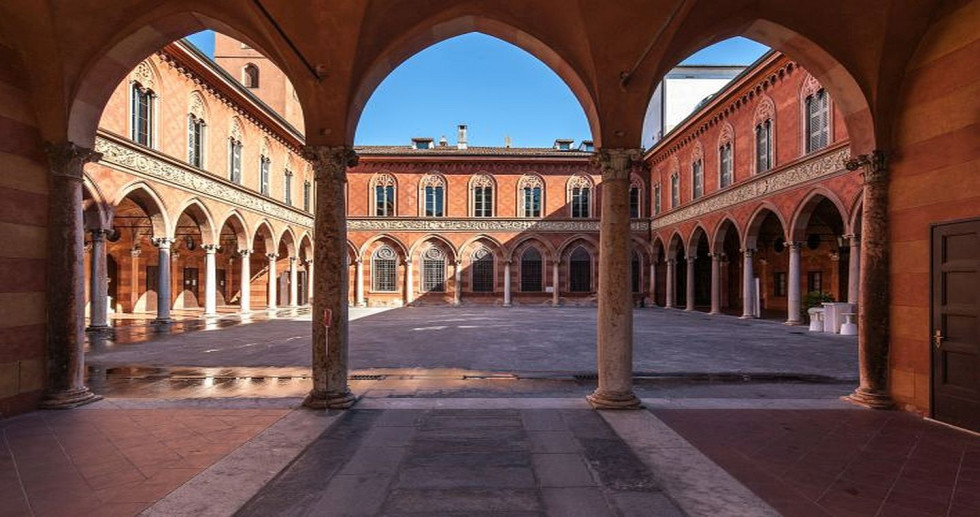
It was built in the 13th century outside the ancient Roman city and, together with the church of Sant'Agata, formed the nucleus of the new urban expansion in medieval times, desired by the “popular” faction, as opposed to the “notables” who had their centre in Piazza del Comune.
In the new palace, the “Società del Popolo” held its assemblies, elected its consuls and conducted its business.
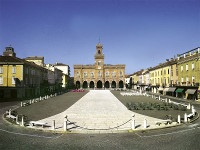
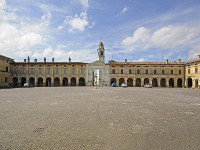
Inspired by the architecture of the Palazzo Comunale, it stands on the square with a two-storey façade: the lower storey consists of a portico with Gothic arches and the upper storey is made of brick and crowned with battlements, with four triple lancet windows illuminating a single large room.
In 1410, the building became the seat of the University or Paratico dei mercanti dell'arte del pignolato (Guild of Merchants of the Art of Pignolato).
Over the centuries, it changed use several times: it became a barracks and the seat of the notarial archive, with modifications accompanying the changes in function.
New work was carried out in the early 20th century, but it was not until the 1930s that the building took on its current form, after much controversy.
Inspired by the architecture of the Town Hall, it faces the square with a two-storey façade: the lower storey consists of a portico with Gothic arches and the upper storey is made of brick and crowned with battlements, with four triple lancet windows illuminating a single large room.